It’s no secret that exfoliation should be an unskippable part of a skincare routine. After all, it removes the dead skin cells that get built up on the surface of the skin, improves skin texture, and evens out skin tone, among other benefits. The only issue with exfoliation is the irritation that follows, the severity of which tends to worsen for mature skin. Fortunately, there are a few simple ways and tips that can help you avoid this.
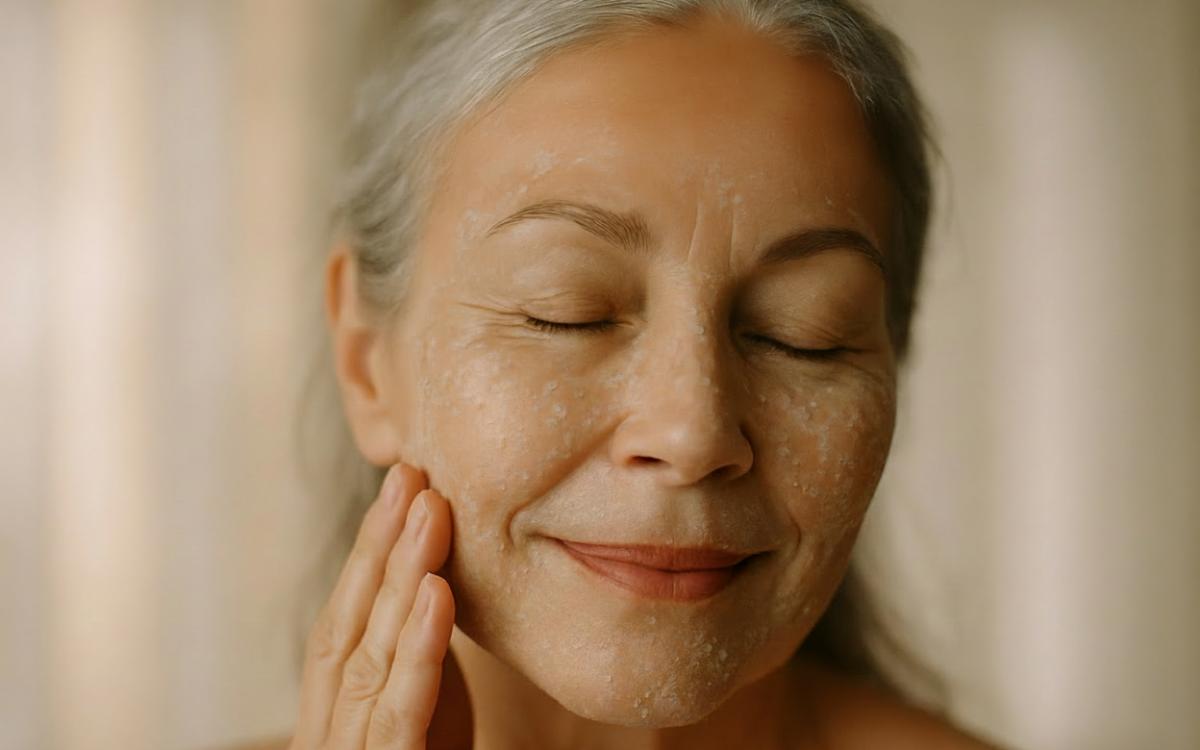
You might be aware of the various products, such as scrubs, liquids, and serums containing BHA and AHA, that you can use for exfoliation. However, when it comes to exfoliators, the primary thing is to know the categories these products fall under. Scrubs and the exfoliating brushes that you get are physical exfoliants. Ground almonds and oatmeal, which make for great natural exfoliation for older skin, also fall under this category. Physical exfoliants work by manually buffing away dead skin cells.
Serums and liquids with gentle acids, such as lactic or glycolic, on the other hand, are chemical exfoliants. These dissolve the dead cells simply on application.
Your choice between the two totally depends on your skin type and comfort. A patch test or a couple of trials of a product can help you understand what works best for your skin.
How to Exfoliate Your Skin Properly
Consider Your Skin Type
Mature skin usually leans toward dryness, as with age, the skin loses its natural ability to retain moisture. Despite that, some may still have oily skin. Either way, since each skin type reacts differently to different chemicals and products, choosing exfoliants carefully is important. Dry skin may need gentler, hydrating chemical exfoliants like lactic acid, as they have hydrating properties. On the other hand, if you have oily skin, you can consider products with oil-soluble compounds, such as BHA. If you have sensitive skin, you need to steer clear of harsh exfoliants, which include most physical products. In most cases, chemical exfoliants work best for sensitive skin.
Along with being dry, mature skin is also usually less resilient. So, frequent scrubbing can end up damaging the external barrier of the skin and cause more irritation and inflammation. The trick to learning how to exfoliate without irritation lies in pacing yourself. Yes, you should be regular with exfoliation, but regular does not always mean ‘daily.’ In this case, it’s better to start by introducing exfoliation once a week. Continue this regimen for some time and observe how your skin responds. If there’s no redness or irritation, you can slowly increase it to twice a week. However, that’s only for chemical exfoliants. The physical variants are best used once a week to avoid irritation.
Be Gentle
When the goal is to practice gentle exfoliation for mature skin, how you apply products matters. If you’re using a scrub, apply it with light, circular motions. Avoid applying too much pressure. Limit the process to around 30 seconds, and rinse with lukewarm water instead of hot. The latter can increase irritation by stripping away natural oils and worsening dryness. And if you prefer brushes or sponges, opt for soft tools and gentle strokes.
Pick a Time
Timing is another key factor to keep in mind for safe exfoliation. Chemical exfoliants, such as AHAs and BHAs, leave the skin more vulnerable to harsh UV rays. This is because these products remove all the dead skin layer and uncover a new, delicate layer. This is why it is ideal to exfoliate at nighttime, so there’s no exposure to the sun, and your skin gets time to repair itself while you sleep. Even retinol should be kept for nighttime usage, as it is highly sensitive to sunlight.
If using scrubs, mornings are generally fine, but it is still recommended to use sunscreen afterward. Consider a broad-spectrum SPF, so it can protect the freshly revealed layer of the skin from UV damage.
Exfoliation not only removes the dead skin cells but also the natural oils of the skin. Once the skin becomes drier, it becomes more prone to irritation, which is why it is essential to follow up with a nourishing moisturizer immediately after exfoliation. This helps the skin restore its moisture. For moisturizers, look for products with soothing ingredients, such as hyaluronic acid and ceramides.
When to Avoid Exfoliation
One of the most essential safe skin exfoliation tips to follow is knowing when to hit pause. If your skin is sunburned, inflamed, or has open cuts, exfoliating can aggravate the issue, worsen irritation, and slow down healing. This applies if you’re experiencing a flare-up of conditions like eczema, where the skin barrier is already compromised.
The Editorial Team at Modern60 is a group of highly skilled professionals with diverse backgrounds in journalism, content creation, editing, and digital media. They bring a wealth of experience and expertise to ensure that every piece of content meets our strict editorial guidelines and quality standards. The team is dedicated to delivering accurate, well-researched, and engaging content across various subjects, including health, wellness, lifestyle, and current events. With their commitment to upholding the highest standards of journalism and content creation, the Modern60 Editorial Team is the driving force behind our mission to empower and inspire our readers.








There are no comments yet